
Interview with Philippe Matta
AI and the future of Photography
A few weeks ago I wrote a post titled AI or photography? High fashion edition, where I looked at the work of Phillippe Matta. A traditional art director with a fashion photography background, he is now creating compelling images with AI tools that commercial fashion brands are using for advertising.
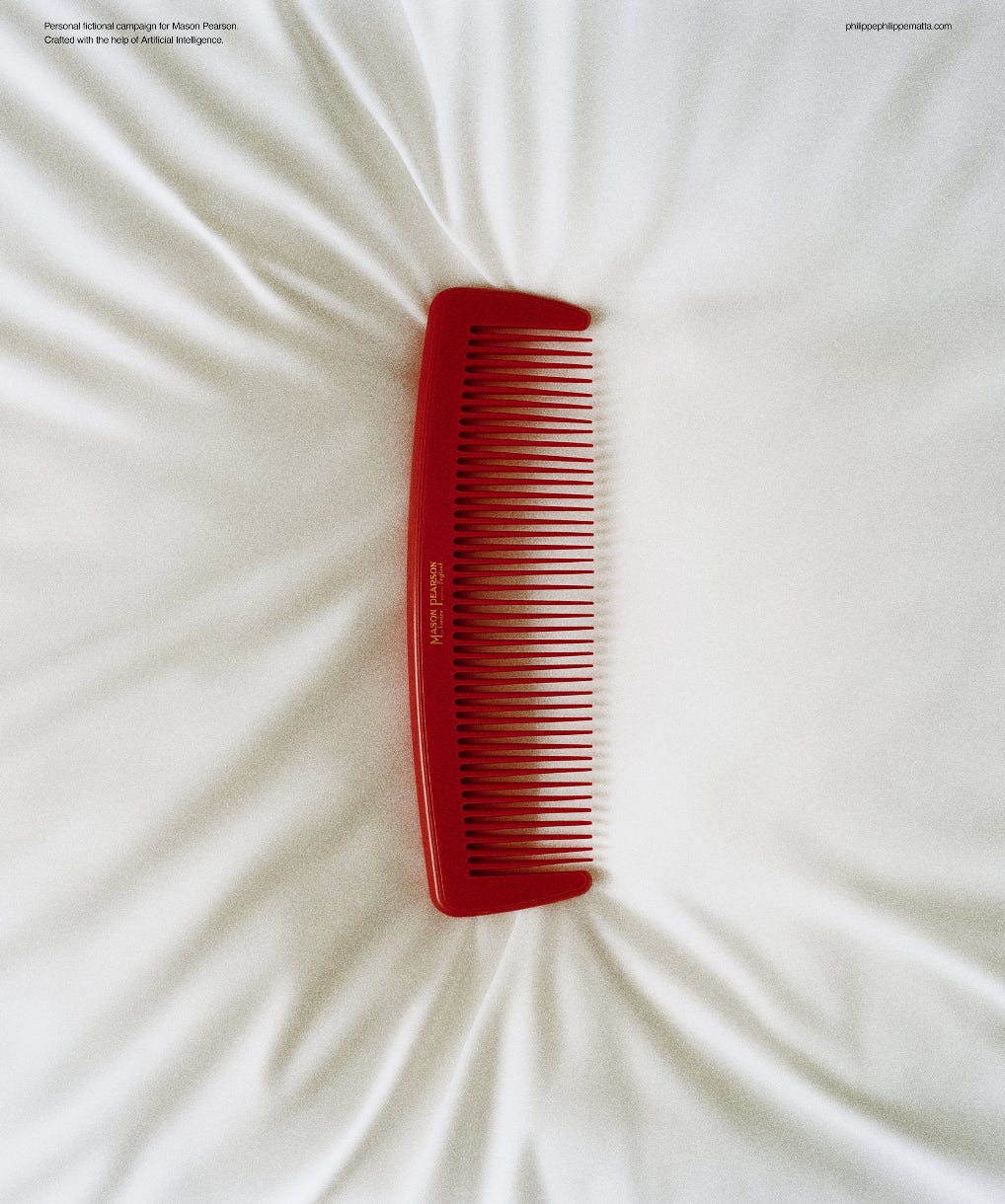
His work represents the existential fear that many photographers (myself included) have long sleepless nights about, so to calm/compound my anxiety I decided to learn more. I reached out to Matta after publishing the original piece and very generously he answered a few of my questions about his practice.
Hi Philippe, when did you start making pictures with these AI image models and why did you start?
I began working with AI image generation nearly two years ago, back when the available models were still in beta. At the time, the topic was gaining traction, sparking concern among my colleagues, many of whom saw AI as a threat. In a way, it was fear that drove me to explore this technology. I’ve always believed that understanding something is the best way to eliminate fear, so I immersed myself in it. What I discovered was an incredible tool, one that allowed me to bring to life the creative ideas I had for the brands I love.
Can you summarise your process for making these images? I know you use Midjourney, but are you feeding photographs into the model as part of your prompt? And how clear is your concept of the final image before you begin prompting?
I rarely use image inputs in my prompts, relying instead on clear and precise text descriptions. However, since Midjourney can be quite stubborn at times, I occasionally include an image reference for specific areas to achieve the desired result.
Much like working on a campaign, I always begin with a strong concept in mind. For example, if I’m creating an image featuring miniature objects, that serves as my starting point. Even though I have a vision for how I want it to look, I make a conscious effort to stay open to new possibilities. I see AI as a creative collaborator, one that offers fresh perspectives and unexpected angles that enhance my ideas.
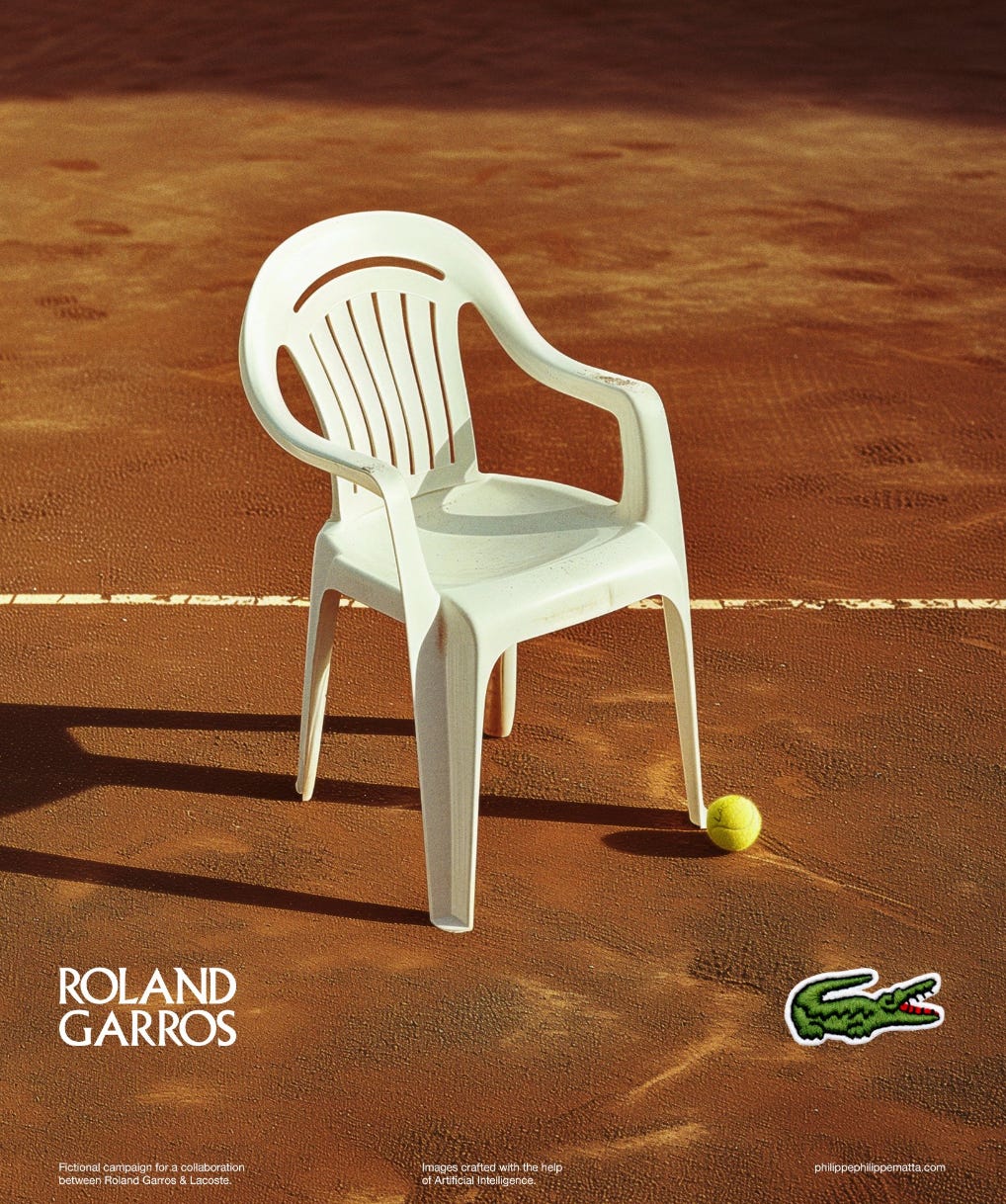
How has your background in traditional art direction influenced your approach to AI image generation? Are there principles or techniques that transfer well?
I believe that my nearly 10 years of experience in Art Direction enables me to create high-quality images that stand out in the vast sea of AI-generated content. Having worked closely with photographers for years (and even stepping behind the camera myself) I’ve developed a strong sense of composition and framing. My background as an Art and Creative Director allows me to take the raw output from Midjourney and refine it, transforming it into a visually compelling, photograph-like image.
When I use Midjourney I always struggle with human faces and skin, they feel a bit plasticy, how have you seen this develop since you first began using these models?
There has been significant progress in rendering facial features, hands, and skin texture. The results are becoming increasingly realistic, but achieving a near-perfect image still requires hours of meticulous retouching.
Are there other people making images with AI image models that you are impressed by? Who inspires you in this space?
Neïla Romeyssa and Jillian Hobbs are two whose work I enjoy. I’m always in awe of creators who bring a surreal vision to their work, I truly admire and even envy that ability.
As someone very familiar and skilled with AI image models and also photography, how do you see the relationship between the two disciplines developing in the commercial fashion world? Many photographers I know are worried about their future, how do you see this playing out over the next few years?
I can’t predict the future, but I can speak from my experience as a Creative Director. Over the past six years, clients have increasingly insisted on fully crafted mock-ups before committing to a shoot. We used to spend endless hours piecing together storyboards from Pinterest images. Now, AI has streamlined this process, allowing us to visualise concepts more efficiently and even test ideas before stepping on set.
Personally, I would love to continue working with photographers. Shoots are always a blast, and there’s nothing quite like the human connection they bring. That said, AI is a revolution. I often compare it to the arrival of the internet. It’s impossible to ignore, and its impact will only grow. Interestingly, some major brands have outright banned AI in their marketing, so there will still be opportunities for traditional roles. But I strongly encourage photographers to explore AI. Like art directors, they might discover innovative ways to integrate it into their craft, rather than seeing it as competition.
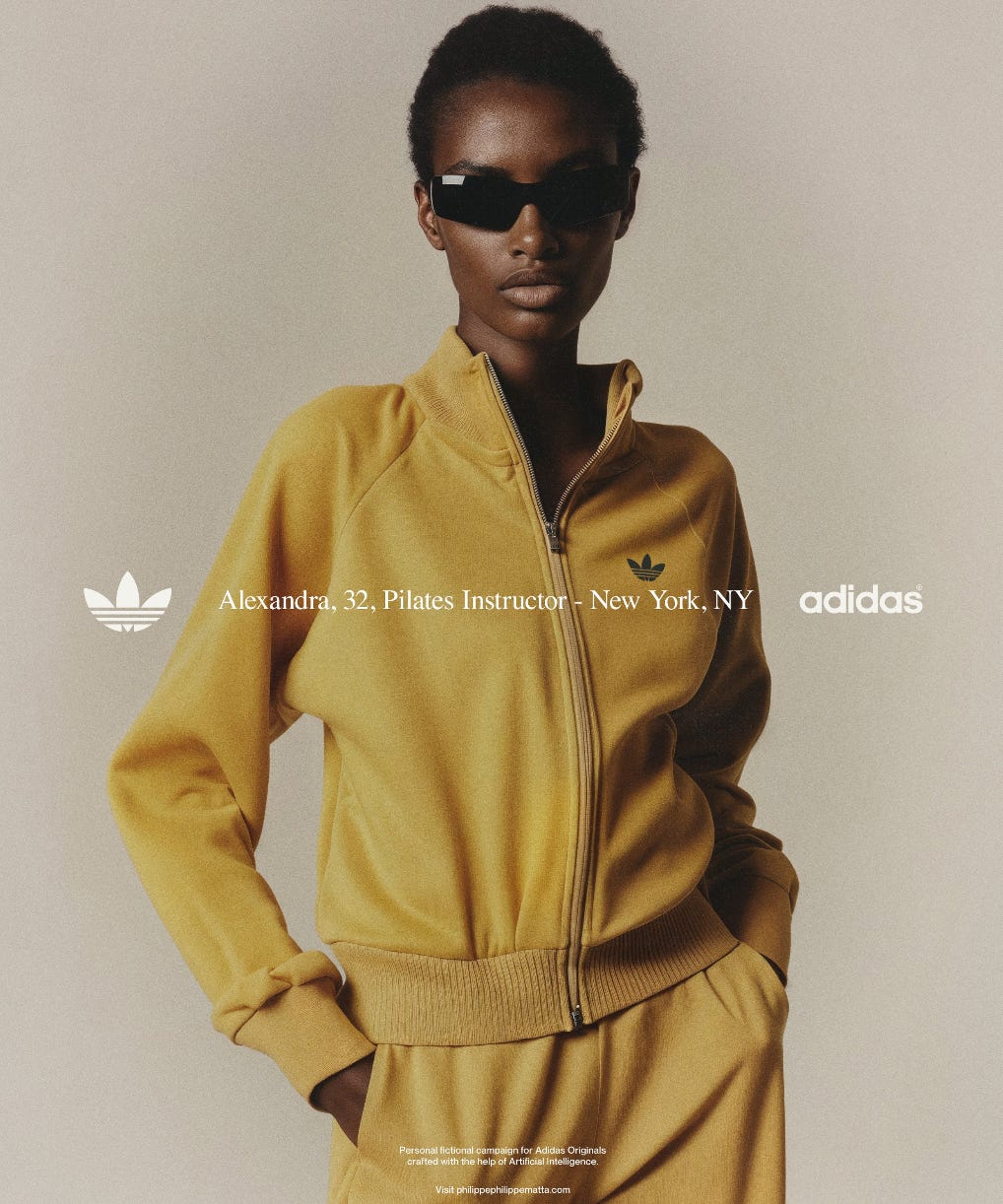
Have you presented your AI image portfolio to commercial clients? If so, how have the reactions been?
Since the start of this year, I’ve collaborated with over 10 brands to create AI-driven content. Some embrace the process fully, understanding the need for flexibility when working with this technology. Others love the idea of AI but struggle with the unpredictability, often providing overly specific feedback that can be counterproductive.
How do you see your own creative practice evolving as these AI tools continue to develop?
Honestly, I don’t have all the answers. I’ve taken a leap into the unknown and am still free-falling. But I’m excited to see how future regulations will shape the boundaries of AI use. Recently, I created some images that felt almost too realistic, and I hesitated to post them as they were. Instead, I scaled back on the retouching to maintain a subtle AI aesthetic. A part of me still craves the “old-fashioned” way of working, and I’m not ready to let go of that just yet.
If someone was interested in trying to make pictures that look like photographs with these models, where should they start?
Practice, practice, practice. With AI, practice and patience are the only ways to get better. And I would start with Midjourney; for now it is my favourite model.
Follow Philippe Matta on Instagram and see more of his work at his website.